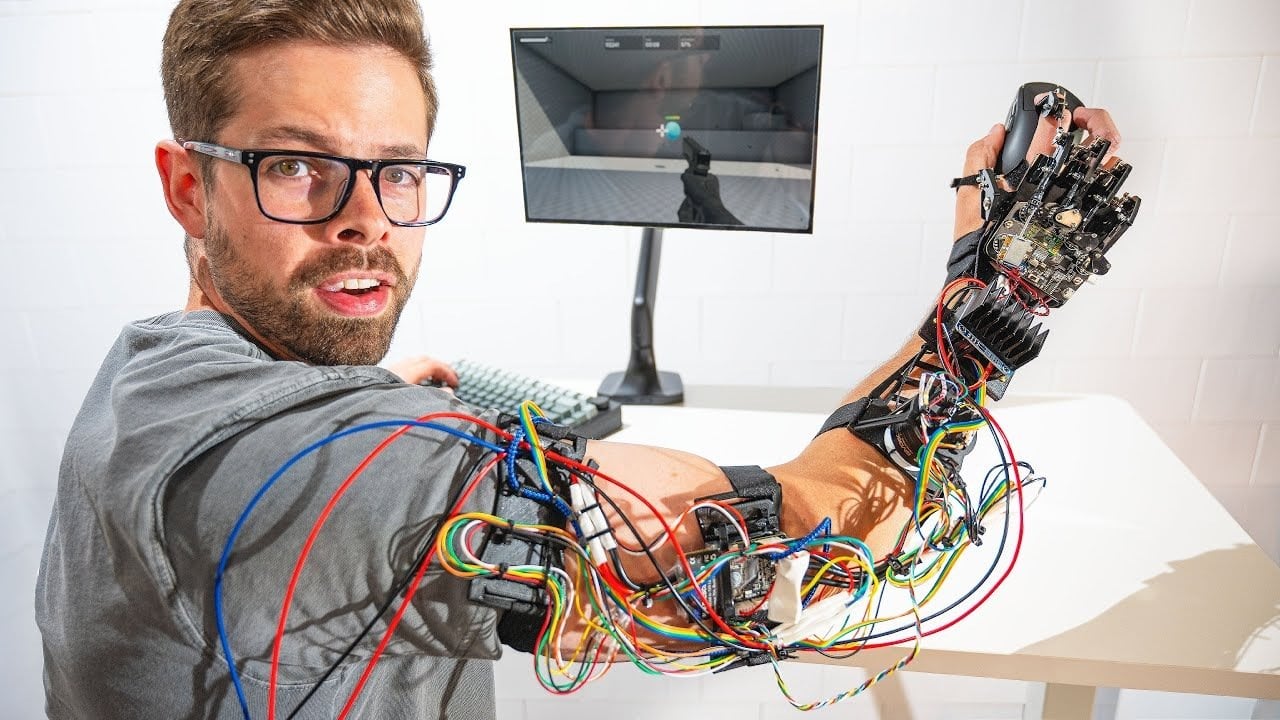
Imagine a device that elevates your gaming skills to a level previously considered unthinkable. Enter the AI gaming exoskeleton, a revolutionary innovation that not only enhances your reflexes but fundamentally transforms how you engage with competitive play. By merging sophisticated robotics, advanced computer vision, and mechanical engineering, this cutting-edge technology promises to redefine precision gaming. Whether you’re an elite esports athlete or a casual gamer aspiring for perfection, the AI gaming exoskeleton challenges the boundaries of human capability in thrilling and unprecedented ways. This article explores how this device may fundamentally reshape your gaming experience, offering an unparalleled level of precision and responsiveness.
How the AI Gaming Exoskeleton Enhances Your Gameplay
The AI gaming exoskeleton leverages several advanced components to improve accuracy and responsiveness. Here are some of the primary benefits it offers:
- Motorized Wrist Adjustments: This feature delivers precise wrist movements, allowing players to make pinpoint adjustments effortlessly during gameplay.
- AI-Powered Target Recognition: Utilizing sophisticated algorithms, the system identifies and targets opponents faster than traditional human reflexes.
Imagine playing a fast-paced shooter where every millisecond counts. With the AI gaming exoskeleton, you can react instantaneously, securing an edge over your competition. The key lies in its integration of various technologies that work in harmony to elevate your gaming experience.
The Technology Behind the Exoskeleton Aim Assist
The AI gaming exoskeleton operates through a seamless combination of hardware and software, which includes:
- High-Speed Motor Controls: The system utilizes advanced gimbal motors and Kevlar lines for unparalleled control and precision in wrist adjustments.
- Computer Vision Capabilities: Powered by the You Only Look Once (YOLO) model, the exoskeleton can quickly identify in-game targets, amplifying the player’s ability to react accordingly.
These sophisticated components work in concert, providing a gaming experience that minimizes human error and maximizes performance. The result? Enhanced accuracy and a significantly improved competitive edge.
Overcoming Technical Challenges
Developing the AI gaming exoskeleton required overcoming several complex technical challenges:
- Latency Management: Achieving a latency of less than 25ms is crucial. This was accomplished through optimizing wiring and motor controls.
- Power Efficiency: The system’s power management was refined to ensure consistent performance, even under high-pressure gaming scenarios.
Through the use of cutting-edge technology like the Nvidia Jetson AGX Orin processor, the exoskeleton has reached an astonishing latency of just 17ms, ensuring real-time responsiveness during gameplay.
Demonstrated Performance in Competitive Scenarios
In rigorous testing environments, the prototype of the AI gaming exoskeleton was put to the test. It achieved impressive results, securing second place among competitors. Key features that contributed to this performance included:
- Exceptional Aim Assist: The motorized wrist system allowed players to execute movements with precise accuracy.
- Swift Target Tracking: Enhanced target identification through AI allowed players to track opponents efficiently.
These results illustrate the remarkable impact of robotics and engineering on competitive gaming, paving the way for a new standard in performance.
Looking Ahead: Neuromuscular Integration Possibilities
The next phase of the AI gaming exoskeleton project involves exploring neuromuscular integration, which may create a seamless connection between the user’s natural muscle movements and the device. This could lead to:
- A More Intuitive Gaming Experience: Players could enjoy an enhanced level of control, allowing for better-targeted actions.
- Broader Applications in Assistive Technologies: Potential adaptations for individuals with motor impairments could result in groundbreaking solutions in mobility and dexterity.
The future of this technology holds limitless potential, influencing not just gaming but various sectors reliant on precision and control.
Pioneering the Future of Gaming Technology
The AI gaming exoskeleton exemplifies how innovations in robotics, computer vision, and mechanical engineering can push the boundaries of gaming technology. As the project continues to evolve, it promises an even greater leap in precision and performance. The integration of neuromuscular technology could redefine not just gaming but also provide valuable solutions in assistive technologies, marking a pivotal moment in human-machine collaboration.
To deepen this topic, check our detailed analyses on Gadgets & Devices section