In a groundbreaking development for medical technology, organ chip technology is paving the way for innovative therapies designed to combat the ever-evolving influenza A virus. A shocking statistic reveals that this virus has been responsible for six major flu pandemics, resulting in the deaths of 50 to 100 million people worldwide. In the U.S. alone, influenza A leads to between 140,000 and 710,000 hospitalizations each year. Despite the availability of seasonal vaccines, the virus continues to mutate, making it increasingly challenging for medical researchers to develop effective treatments. Here, we explore how organ chip technology offers new possibilities in the fight against influenza A, promising improved safety and efficacy in clinical applications.
The Promise of Organ Chip Technology
Organ chip technology relies on microfluidic systems that mimic human organ functions, enabling researchers to conduct experiments in a controlled environment that closely resembles the human body. This technology provides several advantages over traditional animal models, which often fail to replicate human physiological responses accurately.
- Enhanced accuracy in testing drug reactions.
- Reduced reliance on animal testing.
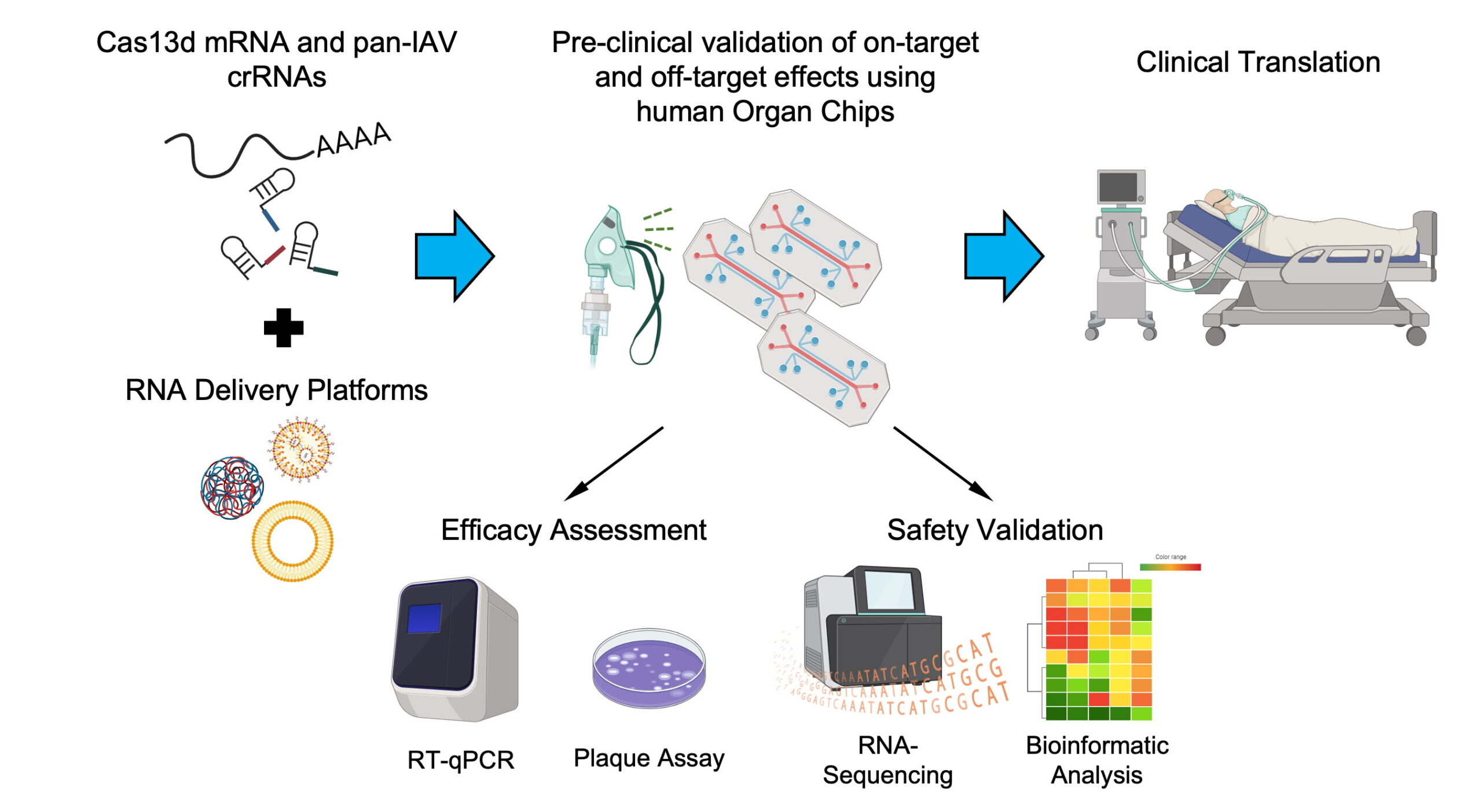
By utilizing human organ chips, researchers can better evaluate the efficacy and safety of treatments targeted at viral infections like influenza A. A recent study led by the Wyss Institute at Harvard University demonstrates how a human lung alveolus chip can serve as a reliable model for testing new therapies.
How CRISPR and Organ Chips Work Together
In the study, the research team engineered a CRISPR RNA therapy designed to target conserved sequences in the influenza A virus genome. The results were impressive: a single administration of the therapy reduced viral load by over 50% in the engineered lung tissue, significantly mitigating the host’s inflammatory response.
This development highlights the crucial role that organ chip technology plays in evaluating CRISPR’s potential for treating viral infections. By closely mimicking the human respiratory system, the organ chip aids researchers in overcoming obstacles linked to animal models, enabling them to test therapies more effectively.
Clinical Relevance of Organ Chip Technology
The clinical implications of using human organ chips for testing new treatments are profound. This model fosters an environment where therapies can be assessed in a setting that closely resembles actual human physiology. For example, the study conducted by the Wyss Institute emphasizes the importance of evaluating potential off-target effects of CRISPR therapies, which are sometimes overlooked in standard testing.
- Reduction in false positives during treatment assessments.
- Increased understanding of therapeutic side effects.
Moreover, organ chip technology empowers developers to anticipate challenges in drug efficacy, thus accelerating the timeline for bringing new antiviral treatments to market.
Advantages of Organ Chip Technology Over Traditional Models
While traditional animal models have played a vital role in pharmaceutical development, their limitations in replicating human biology have become increasingly apparent. In contrast, organ chip technology offers a series of critical benefits:
- Realistic representation of human organ function.
- Cost-effectiveness in research and development.
- Potentially faster results without the ethical concerns associated with animal testing.
These advantages make organ chip technology an attractive choice for medical researchers looking to develop new treatments for influenza A and other infectious diseases.
The Future of Organ Chip Technology
As research advances, the integration of organ chip technology with gene-editing techniques such as CRISPR presents exciting opportunities for combating viral infections. This synergy has the potential to revolutionize how medical researchers approach vaccine development and antiviral treatments, offering hope for long-term solutions to ongoing health crises.
With the probability of future influenza pandemics looming, it becomes more imperative to focus on innovative methodologies. The work at the Wyss Institute serves as an inspiring example of how leveraging human organ chips can facilitate breakthroughs in the understanding and treatment of viral infections.
Integrating these advanced techniques into healthcare strategies could lead to more effective antiviral therapies, ultimately saving countless lives.
Conclusion
In conclusion, organ chip technology represents a significant advancement in biomedical research, especially regarding the fight against influenza A. The promise of accurately modeling human physiology allows for better testing and validation of CRISPR therapies, leading to potential new solutions in combating viral infections. These innovations are crucial in enhancing our preparedness for future pandemics.
To deepen this topic, check our detailed analyses on Medical Innovations section
For further insights, you may also explore similar advancements in the field, such as those discussed in our articles about AI strategies being effectively implemented (here), and the remarkable enhancements seen in AI’s role in healthcare (here).
Overall, organ chip technology stands at the forefront of modern biomedical applications, transforming how we approach the prevention and treatment of infectious diseases.