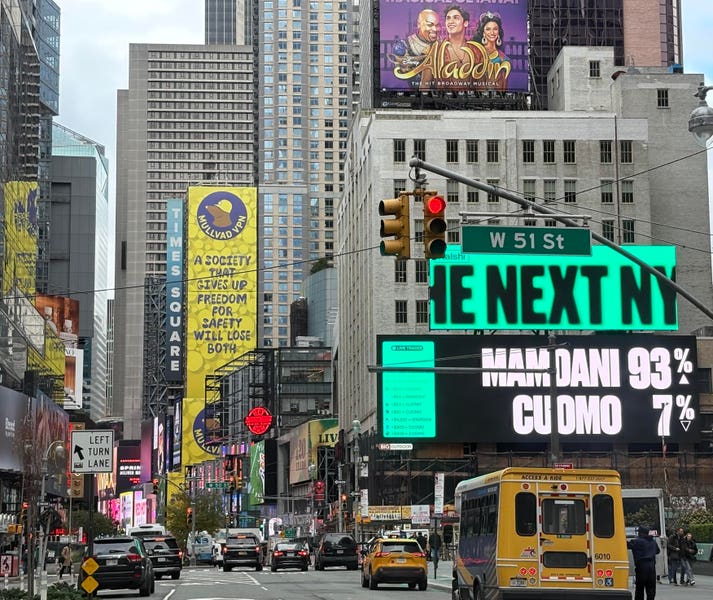
In a rapidly changing political landscape, the rise of **NYC democracy betting** has captivated attention, reshaping how we interpret public sentiment, particularly in the context of elections. As prediction markets reach all-time highs, with over $2 billion traded weekly on platforms such as Polymarket and Kalshi, the implications are profound. Why does this matter? Because it signifies a pivotal shift in the intersection of finance, politics, and social discourse. The extraordinary activity surrounding the New York City mayoral race, where candidates like Andrew Cuomo and Zohran Mamdani dominate discussions, illustrates how these bets now serve not just as a forecasting tool, but potentially as a mechanism to influence voter perception. This article promises to dissect the implications of **NYC democracy betting**, and how it transforms our understanding of electoral dynamics.
Understanding the Rise of NYC Democracy Betting
The popularity of **NYC democracy betting** stems from a fundamental human desire to predict the future. In recent years, political prediction markets have transitioned from academic circles to mainstream platforms that cater to the masses, fueled by social media engagement and high-stakes gambling culture. A quick glance at betting odds on platforms shows a reflection of public sentiment that can sway opinions and behaviors. But can these figures genuinely predict outcomes, or do they create the illusion of certainty regarding political momentum?
Evidence shows that when political events are linked to betting, it often enhances interest and engagement among users. Conversations swirling around the New York City mayoral race are now frequently punctuated by fluctuating odds that people perceive as indicators of candidate viability. This growing “market sentiment” encapsulates a blend of optimism and skepticism, with potential repercussions extending beyond mere financial transactions.
The Psychological Impact of Betting on Public Opinion
When we analyze the psychological landscape surrounding **NYC democracy betting**, it becomes clear that these platforms tap into complex human emotions. The thrill of predicting outcomes can lead to compulsive behaviors, where users feel an overwhelming urge to buy into trends—regardless of their personal convictions. The rush of making successful predictions can create a cycle of addiction, where individuals become more engaged in betting, often losing sight of the actual facts.
Such emotional dynamics have real-world consequences. As speculation amplifies, so do the narratives shaped by public sentiment, which can in turn influence voter behaviors, media narratives, and donor activities. With increasing volatility in political betting markets, we see a ripple effect where perception reshuffles reality. This self-reinforcing process, known as reflexivity, could elevate the role of **NYC democracy betting** in the democratic process—a phenomenon that raises ethical concerns.
Market Mechanics: How Betting Influences Democratic Outcomes
Looking deeper into the mechanics of **NYC democracy betting**, platforms like Polymarket and Kalshi are designed to maximize user engagement through interactive interfaces reminiscent of gaming. By leveraging colorful graphics, immediate rewards for successful predictions, and gamified elements, such platforms transform the act of betting into an enticing experience. However, this design can skew the importance of accurate information, leading users to chase dopamine hits rather than meaningful insights.
- Prediction markets distort public understanding by emphasizing trends over facts.
- Coordinated trading by a few can misleadingly create a veneer of consensus where none exists.
Consequently, a fundamental imbalance emerges: while **NYC democracy betting** ostensibly reflects public opinion, it can also shape it in harmful ways. When people perceive probabilities as truths, they may be misled, impacting their voting behavior and ultimately the outcomes of elections.
Regulatory Challenges in the Era of Political Betting
The surge in prediction betting markets has outpaced regulation, creating a gray area that poses significant challenges to consumer protection. Currently, the Commodity Futures Trading Commission (CFTC) provides some oversight, but enforcement remains disjointed across state and federal jurisdictions. Platforms flirt with legal uncertainties, which can leave bettors vulnerable to exploitation. For example, the headline-making developments involving Kalshi’s battle for regulatory approval exemplify the tensions between innovation and oversight.
As these markets evolve, so too must our framework for understanding their implications. Regulators will need to adopt a more proactive approach, ensuring that protective measures – including transparency about odds and affiliations relevant to the events being bet on – are employed effectively.
Conclusion: The Balance of Prediction and Reality
The promising potential of **NYC democracy betting** as a tool for collective insight must be tempered with caution. There’s a distinct difference between predictive analytics and the narratives they create; a mere statistic can sway public sentiment, magnifying biases rather than illuminating truth. For the preservation of democratic integrity, educating bettors about the nature of these markets is imperative. Individuals should be aware that a claim of a “78 percent chance of victory” doesn’t equate to an absolute reality but is instead a snapshot of market sentiment and liquidity.
To deepen this topic, check our detailed analyses on Banking & Fintech section
For further insights on pertinent societal issues, explore our detailed insights on health tips, tackle under-eye circles, and delve into our concurrency analyses, ensuring you remain informed and engaged in this dynamic area.