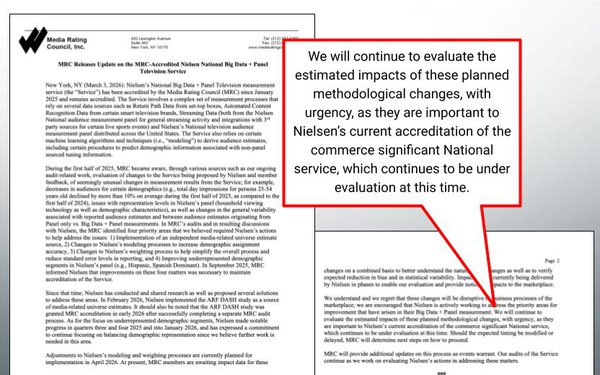
In a world increasingly driven by data, organizations are becoming more reliant on accurate measures of audience behavior. However, recent revelations surrounding **Nielsen data issues** have raised significant concerns within the industry. A report by the Media Rating Council (MRC) unveiled unexpected discrepancies in Nielsen’s Big Data + panel measurement service, showing double-digit declines in viewing metrics for adults aged 25 to 54. Such startling statistics not only impact media agencies but also reverberate across advertising strategies and market evaluations. As this situation unfolds, understanding the core of these **Nielsen data issues** is imperative for advertisers and broadcasters alike.
Understanding the Impacts of Nielsen Data Issues
The MRC recently disclosed that its auditors encountered some **Nielsen data issues** starting in the first half of 2025. These issues, which resulted in a marked 10% drop in total day impressions among key demographics, highlight serious flaws in how audience demographics were being reported. Problems included:
- Variability in audience estimates: There were substantial discrepancies between estimates derived from traditional panel measurements and those generated from Big Data analyses.
- Representation concerns: The MRC pointed out that demographics like Hispanic and Spanish-dominant audiences were notably underrepresented, which could skew results.
The ripple effect of these **Nielsen data issues** goes beyond mere statistics; they challenge the credibility of the service as advertising transactions hinge on these numbers. As explored in our analysis of AI Job Replacement Billboards: Advocating Workforce Automation, accurate data representation is critical for effective marketing decision-making.
Why These Discrepancies Matter Today
As we venture into 2026, heading towards the annual upfront negotiations, the **Nielsen data issues** may create additional challenges for advertisers and content creators. Traditional reliance on Nielsen’s metrics means that any inaccuracies can propagate through the marketing supply chain—leading to misguided ad spend allocations.
The MRC has expressed that certain adjustments are necessary for Nielsen to maintain its accreditation. These include:
- Independent Media Universe Estimates: Addressing the need for an external verification method to strengthen credibility.
- Improving Demographic Accuracy: Enhancements in the modeling processes to ensure fair representation across diverse audience segments.
This proactive approach is akin to the adjustments outlined in Breast Cancer in Younger Adults: Important Insights to Know, emphasizing timely responses to emerging data challenges.
What Lies Ahead for Nielsen and the Industry
Nielsen’s commitment to remedying these **Nielsen data issues** is crucial not just for maintaining their accreditation but also for upholding the integrity of audience measurement across the board. As they implement refinements such as the Advertising Research Foundation’s DASH service—designed to establish more accurate media universe estimates—the industry watches closely.
Despite these advancements, the uncertainty surrounding data adjustments adds complexity to advertising negotiations. As highlighted in Startup Funding News: Key Highlights from October 17, 2025, rapidly evolving landscapes demand agility and the ability to pivot based on accurate analytics for strategic growth.
Balancing Innovation with Accuracy in Media Measurement
The ongoing evolution in data measurement techniques points toward a future where reliance on legacy systems like Nielsen might diminish, as numerous alternative currencies emerge. While existing platforms may face scrutiny, the need for robust verification methods is more crucial than ever. Tracking viewing habits accurately has become a linchpin for advertisers, as underscored by recent shifts toward advanced methodologies in our piece on AI in Accounting: Reclaiming Time and Trust with Innovation.
The Importance of Data Integrity in Advertising
The **Nielsen data issues** have sparked an industry-wide conversation about data integrity and the methodologies we rely on for accuracy. Without a doubt, accurate audience metrics are the lifeblood of effective advertising campaigns. As the MRC continues evaluating Nielsen’s services, it becomes evident that brands must reassess how they engage with data to ensure they’re making informed decisions.
With advertising budgets on the line, many stakeholders are understandably anxious. However, with transparency and improvements, there lies the potential for a stronger media measurement framework. As discussed, upcoming negotiations will likely prompt buyers to consider multiple metrics—ensuring they adapt to the changing environment rather than remain tethered to outdated standards.
To deepen this topic, check our detailed analyses on Marketing & Advertising section