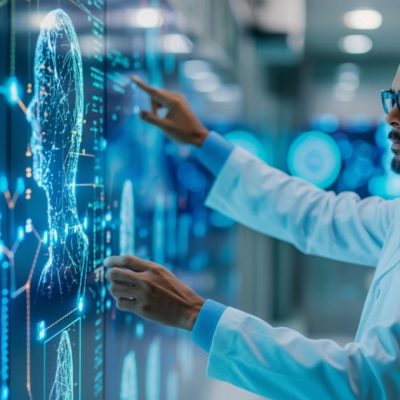
In the ever-evolving landscape of healthcare technology, Diagnostic AI is emerging as a game changer, promising to revolutionize the ways we approach medical diagnostics. Recent studies indicate that the global market for AI in healthcare is expected to reach a staggering $187.95 billion by 2030, highlighting the immense potential of innovation in this sector. As organizations strive for more accurate, timely, and efficient healthcare solutions, the integration of Diagnostic AI is critical. This technology not only enhances diagnostic accuracy but also streamlines workflows, ultimately leading to better patient outcomes and reduced healthcare costs.
Understanding Diagnostic AI in Healthcare
Diagnostic AI refers to artificial intelligence systems designed to assist healthcare professionals in the diagnostic process. Utilizing machine learning algorithms and vast datasets, these systems can identify patterns, analyze images, and even predict potential health issues long before they become critical. For example, in radiology, AI helps interpret medical images with remarkable precision. This technology is particularly beneficial in busy clinical settings, allowing radiologists to focus on complex cases while quickly triaging standard analyses.
Recent initiatives, such as those explored in our analysis of AI innovations in healthcare, showcase how leading institutions leverage Diagnostic AI to improve patient care and operational efficiency. By implementing such technology, hospitals can expect to experience not just enhanced accuracy but also a decrease in diagnostic errors, leading to an overall elevation in patient safety.
Benefits of Implementing Diagnostic AI
Harnessing the power of Diagnostic AI offers several notable benefits:
- Increased Accuracy: Algorithms trained on extensive medical datasets can identify subtle patterns that may be overlooked by human eyes.
- Time Efficiency: Automated analysis speeds up the diagnostic process, enabling faster treatment decisions and reducing wait times for patients.
- Augmentation of Clinical Decision-Making: By synthesizing vast amounts of information, AI supports healthcare providers in making informed decisions based on comprehensive data analysis.
The American College of Radiology has launched several initiatives to embrace Diagnostic AI, such as the ACR AI-LAB. This program provides radiologists with an educational environment that simulates the entire lifecycle of AI products, from training to validation. Furthermore, ACR’s efforts address ethical considerations in the deployment of these technologies, ensuring that patient care remains paramount.
Challenges and Considerations in Adoption
While the potential of Diagnostic AI is vast, barriers exist that hinder widespread implementation:
- Data Privacy Concerns: The handling of sensitive patient data requires strict adherence to privacy regulations, which can complicate AI deployments.
- Integration with Existing Systems: Ensuring that AI tools smoothly integrate with current healthcare IT infrastructure is a crucial, yet often challenging task.
- Need for Continuous Training: As AI technology evolves, healthcare professionals must receive ongoing training to keep pace with new tools and methodologies.
Supporting such discussions aligns with our examination of innovative trends, similar to strategies discussed in AI startup funding, indicating that investment in health technologies is on the rise despite these challenges.
The Future of Diagnostic AI in Clinical Practice
Diagnostic AI will continue to shape the future of healthcare by addressing existing challenges while also improving access to high-quality diagnostics. As we look toward tomorrow, clinical practices can expect to see a convergence of AI technologies working hand-in-hand with medical professionals, enhancing their capabilities to deliver precise and timely care.
Libraries of foundational models that focus on various diagnostic tasks, as detailed in the insights about Diagnostic AI deployments and innovations, will empower healthcare providers by creating solutions tailored to their specific needs. The successful incorporation of these systems hinges on collaboration with stakeholders across the healthcare spectrum, from policymakers to technologists.
Conclusion: Embracing the Revolution
The integration of Diagnostic AI into healthcare shows tremendous promise for improving patient outcomes and operational efficiency. By addressing the challenges and embracing the opportunities presented by this technology, healthcare providers can navigate the complexities of modern diagnostics and pave the way for a future filled with possibilities. As explored in our analysis of cell culture advancements, staying at the forefront of innovation will enable providers to deliver better care and optimized solutions to patients worldwide.
To deepen this topic, check our detailed analyses on Medical Innovations section