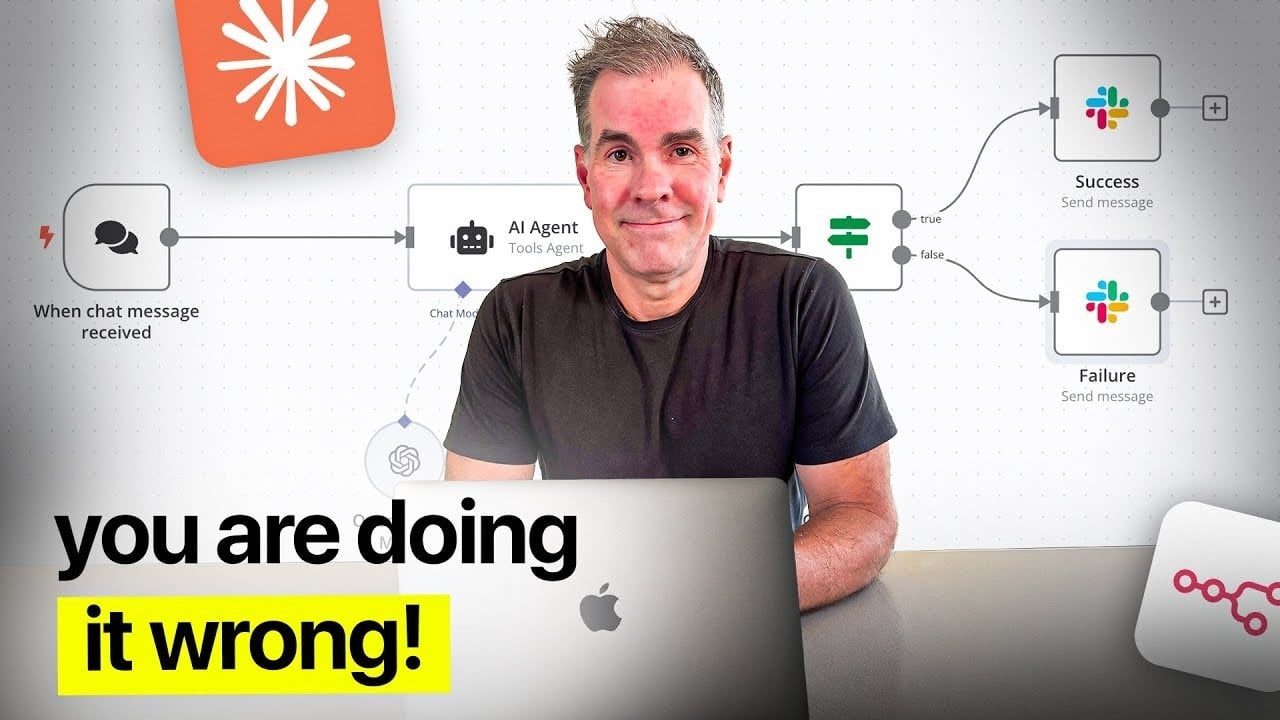
Imagine a world where your most tedious, time-consuming tasks are handled seamlessly while you focus on what truly matters—strategy, creativity, or simply taking a breath. Sounds futuristic? It’s not. AI agents are already transforming how businesses operate, offering a level of autonomy that goes far beyond traditional tools like chatbots or productivity assistants. These intelligent systems don’t just respond to commands; they learn, adapt, and execute complex workflows with minimal human input. Whether it’s automating email management or streamlining data-heavy processes, the potential for these agents to transform your operations is staggering. If you’ve ever felt bogged down by repetitive tasks or wondered how to scale your efforts without burning out, this guide will show you the way forward.
In this guide, you’ll uncover the core principles behind building and deploying AI agents that work smarter, not harder. From selecting the right AI model to integrating tools like Slack or Google Sheets, this resource breaks down the process into actionable steps. You’ll also explore how to identify the perfect tasks for automation, ones that are repetitive, time-consuming, or follow clear workflows. With insights into best practices and real-world examples, such as automating email management, this guide will leave you equipped to harness the full power of AI agents. The question isn’t whether you can use AI agents, it’s how far they can take you.
Understanding the Power of AI Agents
AI agents represent a significant advancement in technology, offering capabilities that are fundamentally different from traditional AI tools. Unlike chatbots, which are primarily reactive, AI agents can proactively manage complex workflows. These systems can understand requests, execute tasks autonomously, and adapt to new information, making them invaluable in streamlining business operations.
- Autonomy: AI agents can perform tasks without human intervention, handling everything from scheduling meetings to managing data sets.
- Learning: These agents learn from interactions, improving their performance over time.
To truly utilize the benefits of AI agents, understanding their key components is essential. This includes selecting robust AI models, integrating them effectively with other tools, and ensuring they are provided with clear instructions to function optimally. Moreover, establishing a strong memory system helps these agents retain crucial information, allowing for enhanced functionality.
Key Components of Building AI Agents
Creating an effective AI agent requires a structured approach. The “Agent Foundations Playbook” emphasizes four essential components:
- Intelligence: Select a robust AI model, such as GPT-4 or Claude, to process and analyze information accurately and efficiently.
- Integrations: Connect to tools and platforms like Slack, Google Sheets, or Zapier for seamless workflows and data exchange.
- Instructions: Provide clear and concise prompts that define the agent’s role and operational parameters.
- Memory: Incorporate short-term and long-term memory functions for better contextual understanding and knowledge retention.
Combining these elements enables you to create AI agents capable of managing complex tasks and adapting to evolving business needs.
Identifying Tasks Ideal for Automation
Not all tasks are suitable for automation. To maximize the value of AI agents, focus on tasks that meet specific criteria:
- Repetitive Tasks: Activities like data entry and report generation that follow predictable patterns.
- Time-Consuming Tasks: Necessary but labor-intensive activities that divert attention from strategic work.
Before automating, evaluate each task by considering its importance and clarity. Ensure it has well-defined steps that can be easily translated into an automated process. Assess the potential risks and implement safeguards, such as human review, for critical tasks.
Practical Example: Automating Email Management
Email management is a common area where AI agents can deliver substantial value. Here’s how to build an AI agent to streamline this process:
- Use No-Code Tools: Platforms like Relay.app, Zapier, or Lindy.ai allow you to create workflows without requiring coding expertise.
- Define Triggers: Set up triggers, such as receiving an email, to automatically initiate the agent’s workflow.
By categorizing incoming emails and providing access to knowledge bases, the AI agent can craft accurate responses. Enabling human oversight for complex cases ensures quality control while saving time and improving response accuracy.
Best Practices for Developing AI Agents
To ensure that your AI agents perform effectively, consider the following best practices:
- Provide Context: Equip your agents with necessary context and resources to perform tasks effectively.
- Start Small: Test a single workflow before scaling up to more complex tasks.
- Continuously Refine: Regularly review workflows to improve the agent’s accuracy and efficiency over time.
In conclusion, by following these practices, you can create AI agents that not only meet your current needs but also evolve to address future challenges and opportunities within your business.
To deepen this topic, check our detailed analyses on Gadgets & Devices section
For further insights on AI agents, refer to similar strategies discussed in our analysis of self-awareness leadership, or explore ChatGPT prompts for CEOs that can enhance your strategic leadership skills. You can also learn about AI chatbot policies implemented by Meta to ensure safety and explore methods to qualify AI email fraud prevention as part of your strategy.
Leveraging AI agents will help you streamline your operations and focus on what truly matters in your business.