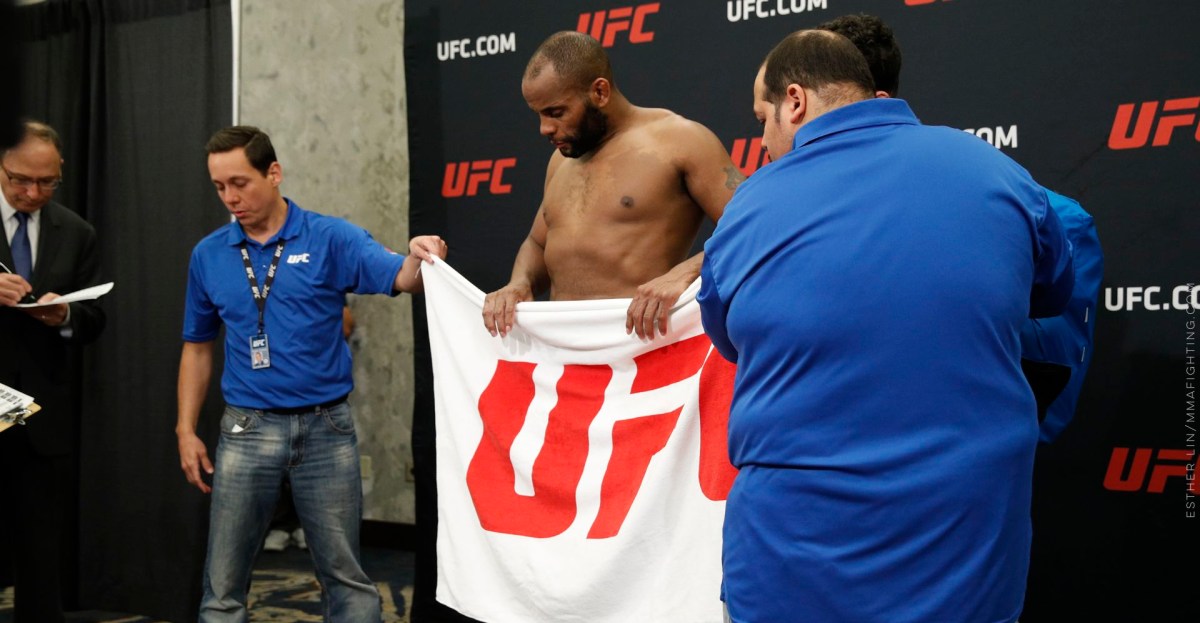
Daniel Cormier’s infamous moment during the UFC 210 weigh-ins remains a bizarre and unforgettable incident in MMA history, often referred to as the UFC 210 towel gate. As he prepared for his championship bout against Anthony Johnson in April 2017, Cormier faced significant challenges while cutting weight. Remarkably, he ended up using a towel to manipulate the scale in his favor, an action that has drawn scrutiny and debate ever since. But who was truly to blame for this moment of controversy? In a recent revelation, Cormier pointed a finger at his long-time teammate, Luke Rockhold, citing him as a critical factor leading to the incident.
Cormier recounted how, prior to stepping on the scale, he was struggling to shed those final crucial pounds. In a moment of weakness, he confided in Rockhold, who, eager to leave due to a personal engagement, urged him to stop his efforts early. This decision would come back to haunt Cormier, framing the UFC 210 towel gate incident as not just a personal failing but a team dynamic that failed him. In his own words, he stated, “I hope whoever it was was worth it to Luke, because then I had to have the most embarrassing moment of my career.”
Understanding the UFC 210 Towel Incident
The UFC 210 towel gate incident has since raised questions about the regulations governing weigh-ins in the UFC. This incident occurred during a time when many believed that the weighing process lacked stringent oversight. Cormier’s admission that he used the towel for assistance during the weigh-in adds to the discussion surrounding the integrity of the sport. It sparked debates not only about ethical guidelines but also about the conditions athletes face when cutting weight. In parallel, challenges faced by MMA fighters can sometimes echo those encountered by athletes in other sports, as highlighted in our analysis of Jon Jones and his ongoing battle against weight issues.
Furthermore, the logistical shortcomings during weigh-ins, where officials struggled with oversight, plus the scale incongruities, contributed to Cormier’s predicament, showcasing a lack of structure that could have prevented such situations. The commission members responsible for ensuring a fair weigh-in were also caught off guard, as Cormier noted. This incident serves as a cautionary tale about the need for reform and stricter rules during weigh-ins.
Cormier’s Reflection on Team Dynamics
As Cormier has pointed out, the decisions made by teammates during crucial moments can significantly impact an athlete’s performance. His reliance on Rockhold during this intense weigh-in period ultimately proved detrimental. Cormier’s experience is a reminder that in sports, much like in life, the influence of those around us can lead to critical junctures. Much like the interplay of team roles examined in the unexpected surprises during Kai Cenat’s streaming events, where decisions made by one individual can sway the outcome significantly.
This incident invites a broader discussion regarding accountability and support within sports teams. Just like the ups and downs experienced in various athletic narratives, Cormier’s story brings to light the responsibilities teammates carry in ensuring each other remains on track for success. The unforeseen ramifications of a teammate’s advice can have long-lasting effects.
Impact on Weight-Cutting Regulations
Post-UFC 210, the organization has made efforts to revise its regulations surrounding weight cutting and weigh-ins. The fallout from the UFC 210 towel gate prompted significant discourse on athlete safety and ethical considerations in combat sports. Health experts and fans alike have questioned the lengths to which fighters go to make weight. In this context, it’s interesting to highlight how various sports are responding to athlete safety concerns, similar to the debates currently occurring in soccer, as mentioned in our article on PSG’s recent activities and their effects on player well-being.
Cormier’s experience with the scale issues highlights the necessity for transparency. If weigh-ins remained consistently monitored, instances like the UFC 210 towel gate could not only be avoided but could also reformulate approaches to athlete accountability. This calls for collective efforts within MMA and other sports to implement effective regulations that prioritize athlete welfare while maintaining fair competition.
Legacy of the UFC 210 Towel Gate
Ultimately, the UFC 210 towel gate incident serves as a complex reminder of how crucial such moments are in shaping an athlete’s legacy. Cormier transitioned from this low point to becoming a respected champion, illustrating resilience and determination. It draws parallels to rising stars in various arenas, similar to how young phenoms redefine standards in their respective sports. A prime example includes Carlos Alcaraz, who has set new benchmarks in tennis, much like Cormier did in MMA.
This reflects the broader theme of overcoming adversity while navigating the pressures of competitive sports. The clear takeaway is that athletes often learn valuable lessons during their careers, making the journey just as significant as the achievements themselves.
To deepen this topic, check our detailed analyses on Boxing & MMA section