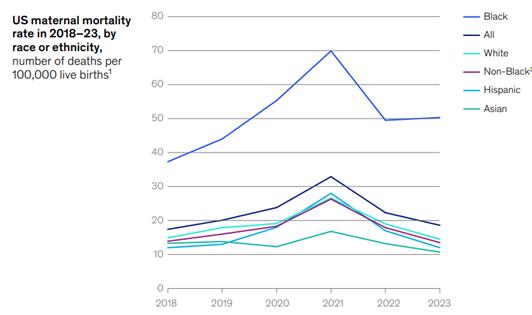
Maternal health remains a critical issue affecting families and communities across the globe. The maternal health gap represents the disparities in maternal health outcomes that disproportionately impact certain demographic groups, particularly Black women. In the United States, Black women face maternal mortality rates that are two to four times higher than their white counterparts. This tragic statistic not only symbolizes a health crisis but reflects deeper systemic inequities that can hinder economic mobility and create generational challenges for families.
Addressing the maternal health gap is more than just a health issue; it’s an investment in our communities and economy. By understanding and tackling the root causes of these disparities, we can enhance health outcomes, strengthen families, and unlock economic potential across generations. Let’s explore the critical steps necessary to bridge this gap.
Understanding the Maternal Health Gap: A Crisis in Care
The maternal health gap is characterized by significant discrepancies in maternal health outcomes based on race and socioeconomic status. Recent research from the McKinsey Institute for Economic Mobility highlights that Black women experience a range of maternal health challenges that significantly impact their well-being and that of their families and communities. For example, Black mothers often face higher rates of complications during pregnancy and childbirth, which not only affects their survival but also adversely impacts the health of their infants. These disparities lead to higher rates of premature births and increased infant mortality rates, which are nearly double the national average.
Furthermore, the economic ramifications of these health challenges are vast. Communities suffer economically when mothers do not survive childbirth, resulting in lost contributors to the local workforce and diminishing prospects for the next generation. The social cost of these tragedies cannot be overstated, as families face enduring challenges in health, employment, and education as a result of inequitable maternal care. Closing the maternal health gap is, therefore, a critical aspect of fostering economic opportunity and strengthening social structures.
Improving Data Collection to Bridge the Maternal Health Gap
A foundational step in addressing the maternal health gap is the enhancement of data collection and analysis related to maternal health outcomes. Currently, inconsistencies in maternal health data across various states create significant barriers to effectively understanding and addressing these disparities. Implementation of standardized definitions and integrated data systems is crucial. By improving racial and ethnic data gathering, healthcare providers and policymakers can better identify successful interventions and scale them effectively.
McKinsey’s research also estimates that women giving birth in the U.S. in 2025 could potentially incur a cumulative 5.5 million years living with disabilities due to maternal health issues. Reducing this burden through improved data collection and targeted interventions can amplify workforce participation, lower healthcare costs, and enhance the economic contributions of affected families. To learn more about the impact of data and healthcare on economic mobility, similar to strategies discussed in our analysis of cardiovascular and kidney health, stronger data systems can pave the way for better health outcomes.
Investing in Maternal Health Research
Research investment in maternal health is another pivotal measure needed to close the maternal health gap. Currently, this area remains under-studied, especially when compared to other therapeutic fields. With only 91 compounds in development for maternal health, the contrast with thousands of compounds in areas like neurology and dermatology is stark. The Lancet has pointed out the persistent lack of innovation for maternal health medicines, indicating a significant gap in the market that fails to meet the needs of pregnant individuals.
By increasing funding for maternal health studies, particularly those that focus on pregnancy-related conditions, we can enhance treatment options that cater to the unique needs of diverse populations. Furthermore, expanding representation of Black women in clinical trials—as demonstrated by initiatives like Yale’s Cultural Ambassador Program—can significantly bolster the scientific rigor of new treatments. A more inclusive research and development ecosystem stands to improve health outcomes across demographics, thus fortifying communities and economies alike.
Expanding Access to Quality Maternal Care
Access to comprehensive pre- and postnatal care is vital for improving maternal and infant health outcomes. Unfortunately, significant gaps in coverage persist, especially among Black women who experience higher rates of being uninsured or having limited access to Medicaid services. This lack of access translates directly into increased maternal mortality rates, higher healthcare costs, and diminished economic mobility.
For businesses, the correlation between maternal health access and economic stability is clear: healthier mothers contribute to more resilient families and workplaces. Incentivizing providers to accept Medicaid, expanding coverage for prenatal services, and exploring innovative healthcare delivery methods—such as telehealth—are practical strategies for bridging this maternal health gap. States are also taking action; for example, Colorado is piloting programs that provide immediate Medicaid coverage for pregnant women during their application process to ensure they can access timely prenatal care.
Taking Bold Actions to Save Lives and Livelihoods
Every maternal or infant death represents a profound human tragedy. To change the trajectory of maternal health outcomes, we must commit to bold and unified action. Strengthened data strategies, increased research investments, and expanded access to quality maternal care are essential to effectively combat the maternal health gap. By embracing these initiatives, business leaders and policymakers can uphold their commitment to protecting families, fortifying communities, and fostering opportunities for future generations.
The push for these changes isn’t just a moral obligation; it presents an opportunity to create a healthier and more prosperous society for all. This shared responsibility can yield extensive societal benefits, strengthening both the familial and economic fabrics of our communities.
To deepen this topic, check our detailed analyses on Career Advice section