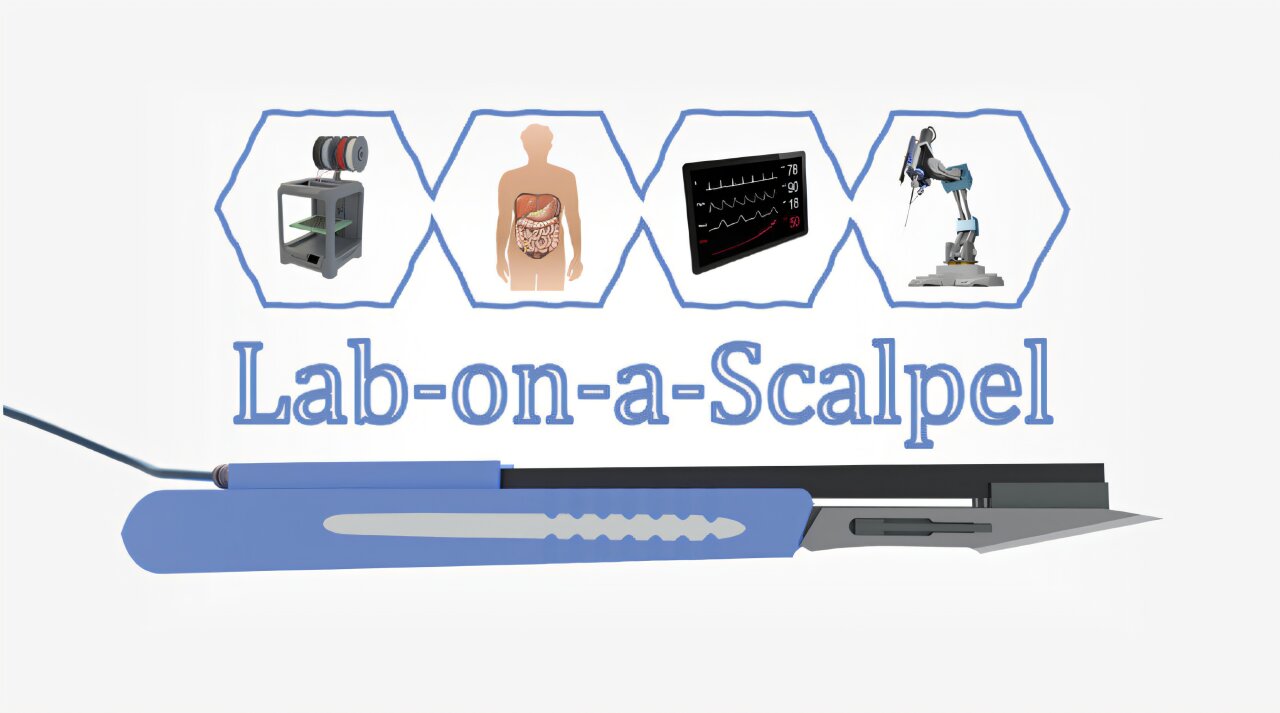
Imagine a surgeon in the middle of a complex operation, able to get instant biochemical feedback not from a lab down the hall, but from the very tool in their hand. This vision is now one step closer to reality thanks to researchers at the University of Chemistry and Technology, Prague (UCT Prague). The team, led by Professor Zdeněk Sofer, has developed and validated a Lab-on-a-Scalpel concept—a surgical tool with an integrated diagnostic sensor. This groundbreaking innovation addresses a critical challenge in surgery: the time lag between sample collection and lab results. During invasive procedures, a patient’s biochemical profile can change rapidly, but traditional testing methods present delays that can compromise immediate, informed decision-making.
The result? A revolutionary device that optimizes surgery while enhancing patient safety and care.
The Revolutionary Lab-on-a-Scalpel: How It Works
The research team has created a disposable, compact electrochemical sensor that is fully 3D-printed and seamlessly incorporated into a standard medical scalpel handle. The genius of the design lies in its simplicity and accessibility. Using a common desktop-sized 3D printer, the team fabricated a multi-layered sensor from a special filament that combines polylactic acid (a bioplastic) with conductive carbon nanomaterials, enabling the device to perform complex electrochemical analysis.
The scalpel’s ability to detect epinephrine, a critical hormone, was validated during tests. The sensor demonstrated exceptional performance by detecting concentrations as low as 130 nanomolar (nM) with just a single 50-microliter drop of fluid—an invaluable benefit in scenarios where biological samples are limited and can be precious.
Accuracy and Cost-Effectiveness of the Lab-on-a-Scalpel
In studies utilizing synthetic blood samples, the Lab-on-a-Scalpel showed remarkable accuracy, ranging between 91% to 105%. Each disposable sensor can be produced on-demand for just approximately €0.40, rendering it a highly achievable and scalable solution that can be utilized in sterile environments.
The potential change brought by this device is enormous, as it signifies a true paradigm shift toward Point-of-Care (PoC) diagnostics within the operating theater. By erasing the delays associated with off-site laboratory work, clinicians stand to gain timely insights into a patient’s condition while procedures are ongoing.
Transformative Implications for Surgical Procedures
“During a critical procedure, waiting for a lab report is a luxury you simply can’t afford,” states Professor Sofer. “Our goal was to create a multifunctional tool that minimizes the number of instruments in the operating room while maximizing actionable information available to the surgeon. Our findings demonstrate that it is achievable.”
The future applications for the Lab-on-a-Scalpel are vast and varied. Further innovations could allow for the instant monitoring of key metabolites, ions, and pH levels directly in tissue. This is especially crucial in oncological and emergency surgeries, where every second truly matters. Additionally, the potential integration with robotic-assisted surgical systems could allow robotic platforms to adjust their maneuvers in accordance with the patient’s live biochemical data, ushering in an era of “smart” surgical environments.
Challenges and Future Developments
While the current version is still a proof of concept, this research confirms that advanced, functional diagnostic tools can be developed using technology that is widely available today. This paves the way for a new generation of smart surgical instruments, which could ultimately transform the safety and responsiveness of surgical procedures.
As examined in our analysis of sustainable lab solutions, the growing demand for innovation in medical technology aligns perfectly with the approach taken by the team at UCT Prague. By merging health technologies with surgical practices, the healthcare industry could see remarkable improvements.
The Broader Impact of Real-Time Diagnostic Tools
The exploration of concepts like the Lab-on-a-Scalpel opens the door to enhancing surgical outcomes and optimizing patient experiences. The ability to analyze biochemical data in real-time can lead to improved decision-making processes during surgeries, impacting recovery times and overall patient satisfaction.
Moreover, the emergence of such technologies aligns with trends in patient-centered care, addressing the need for faster responses in high-stakes situations. Similar to strategies discussed in cancer research advancements, personalized medicine is becoming increasingly viable through immediate access to vital information.
Conclusion: The Future of Surgery with the Lab-on-a-Scalpel
The potential applications for the Lab-on-a-Scalpel technology are not just limited to immediate surgical environments. Its applications could extend into various fields of healthcare, promoting a future where diagnostic tools are seamlessly integrated into routine medical care.
As the development of such advanced technologies continues, the healthcare industry stands poised for revolutionary changes. To deepen this topic, check our detailed analyses on Medical Innovations section.
To deepen this topic, check our detailed analyses on Medical Innovations section