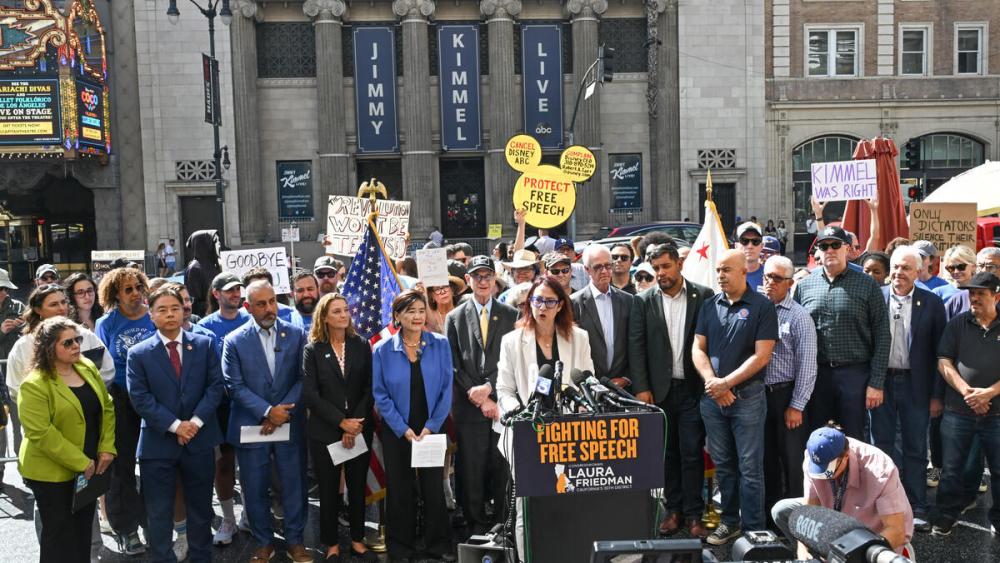
The recent **Kimmel rally** has garnered significant attention, highlighting the intersection of entertainment, politics, and free speech. This rally, held outside the Hollywood studio of “Jimmy Kimmel Live,” was not just an ordinary event; it was an urgent call for media companies, particularly Disney, to uphold First Amendment rights amidst mounting pressure from political figures and government entities. Striking statistics reveal that freedom of expression is increasingly at risk, making this rally crucial for the future of late-night television and beyond.
Participants at the rally, including politicians and guild leaders, emphasized the necessity of standing firm against pressures that threaten to silence dissenting voices. The value promise of this event is clear: it seeks to protect creative expression while advocating for accountability within major corporations, positioning artists and entertainers as defenders of constitutional liberties.
Kimmel Rally: A Stand for Free Speech
The **Kimmel rally** served as a vital manifestation of collective resistance against attempts to stifle creative freedom. Representatives from various political backgrounds aligned, stressing that this movement transcends beyond mere entertainment. Rep. Laura Friedman (D-Calif.) passionately articulated the stakes involved, asserting that the essence of the First Amendment must not be compromised for political gains. “They think that it means it gets free speech as long as Donald Trump likes it,” she stated, illustrating the current climate where dissent is met with punitive action.
This event underscores a broader narrative faced by many artists and creators today. The conversation about media independence is growing as political figures like Trump openly target entertainers whose content they consider critical. The **Kimmel rally** magnified this issue, reminding attendees that the fabric of American democracy is at risk when powerful figures attempt to silence critics. With significant representation from Hollywood’s labor unions, the rally also served as a bedrock for solidarity within the industry.
The coalition formed at the rally emphasizes a resonant truth: media companies must resist political coercion. This aligns closely with similar initiatives promoting free expression and has sparked conversations about the responsibilities of television networks in our society. The implications are profound, not just for Kimmel but for the entire entertainment landscape. By rallying around this cause, the coalition aims to redefine the relationship between media and politics, fostering an ethos of resilience and freedom within the arts.
The Political Landscape and Its Impact on Media
The **Kimmel rally** was not merely one day of activism; it came against a backdrop of intensifying political rhetoric and regulatory actions affecting the entertainment industry. With the FCC’s influence growing under a Trump-era agenda, fears of censorship have escalated. Notably, the political landscape now involves entities like Nexstar and Sinclair, who have pressured Disney to consider their stance on content deemed oppositional to government interests.
The significance of this rally, therefore, extends into regulatory territories. As described by Rep. Judy Chu (D-Calif.), “This is about a president leveraging the power of the federal government to silence his critics.” The timing of the rally, which took place just before Kimmel’s show was set to return, fueled conversations about how political animosity translates into real-world repercussions for entertainment programming. When companies prioritize corporate interests over artistic expression, we witness an alarming trend toward censorship.
Organizers at the rally highlighted the urgent need for media companies to maintain editorial independence. The rally’s speakers articulated a crucial point: corporations must refuse to kneel before political pressures that threaten to infringe upon free speech. This directive reflects a necessity for companies in the entertainment industry to prioritize constitutional values over profitability in tumultuous political times.
Taking a stand during such a politically charged climate can be daunting, yet the rally demonstrated that many creators are unwilling to compromise their rights. They call upon Disney and other media organizations to champion creators’ rights and advocate for fair representation and editorial freedom.
Building a Coalition for Creative Freedom
At the heart of the **Kimmel rally** was a united front—a coalition of artists, politicians, and advocates dedicated to preserving creative expression. The participation of influential personalities, including Writers Guild of America-West President Meredith Stiehm, showed a well-rounded representation from various sectors within Hollywood.
Engaging the public with powerful rhetoric, the participants shared personal stories of struggling against censorship and the need for proactive measures against such pressures. Their message resonated: in an era of political polarization, collaboration across different groups can serve as a robust mechanism for promoting shared goals. This rally not only highlighted the immediate concerns surrounding the Kimmel show’s status but also made clear that the fight for artistic freedom is a collective struggle requiring diverse voices and perspectives.
As the coalition grows, there is hope that their combined efforts inspire widespread advocacy for the arts. The rally serves as a reminder that freedom of speech thrives not just in legislation but in everyday actions undertaken by the community. The **Kimmel rally** symbolizes this synergy, as various factions come together to make clear that continued support for expressive arts is essential to uphold the foundational tenets of democracy and accountability.
To deepen this topic, check our detailed analyses on Movies & TV Shows section.
Conclusion: The Future of Free Speech in Entertainment
The implications of the **Kimmel rally** extend far beyond the immediate context of late-night television. It opens up a broader dialogue regarding the relationship between entertainers and political authority. As a nation that prides itself on free speech, it is crucial to remain vigilant and engaged in defending this right against any forces of intimidation.
With the participation of politicians, industry leaders, and union representatives, this rally has provided a much-needed platform for discussing the rights of creatives in a time when censorship looms large. The messages conveyed during the rally reflect a resilient spirit within the entertainment industry—a commitment to protecting freedom regardless of the political climate.
The struggle for creative freedom is ongoing, and events like the **Kimmel rally** are vital to keep the discourse alive. As we look ahead, it is imperative that industry leaders, creators, and citizens band together in solidarity, ensuring that the tenets of the First Amendment are preserved for generations to come. For an in-depth analysis of the legal landscape surrounding these issues, you can explore more on our platforms.