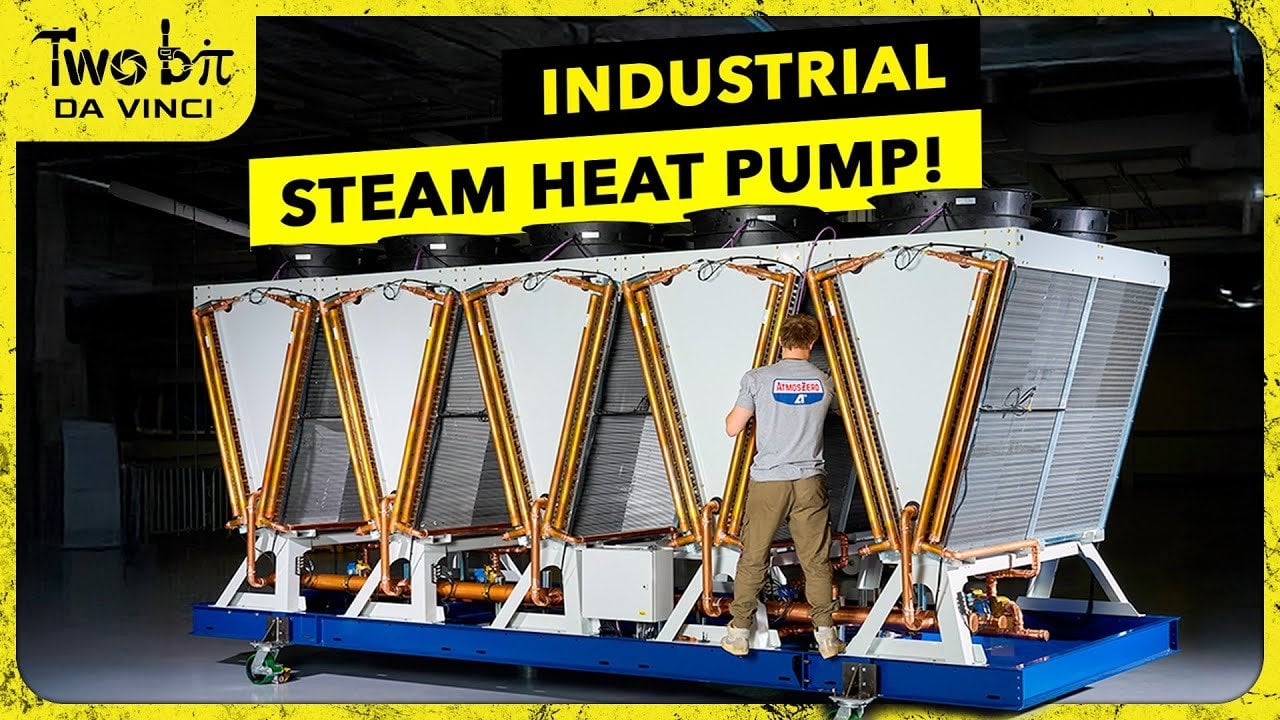
In the quest for sustainability, one critical challenge stands out: boiler fuel reduction. As industries grapple with rising energy demands and environmental pressures, the drive toward cleaner processes has become not just a necessity but a crucial part of their operational strategy. According to recent studies, industrial processes contribute nearly 30% of global energy consumption and account for around 33% of energy-related emissions in the United States alone. This makes the need for cleaner alternatives to traditional energy sources not just urgent, but imperative. With innovative solutions emerging, we can now envision a future where boiler fuel reduction is achievable and practical. One of the standout innovations comes from Atmos Zero, a Colorado-based startup that has developed groundbreaking technology aimed at transforming how industries generate steam.
Revolutionizing Steam Production with Innovative Solutions
Atmos Zero has introduced a heat pump technology that produces steam without relying on fossil fuels, thus addressing a significant roadblock in industrial decarbonization. Their system achieves impressive efficiency by generating steam at temperatures of up to 150°C, with plans to extend this capability to 200°C in the future. A standout feature of this technology is its Coefficient of Performance (COP) of 2, which means it can deliver twice as much thermal energy as the electrical energy consumed. This remarkable efficiency makes it a far superior alternative to traditional resistive electric boilers, which are typically less effective in terms of energy use and emissions.
Furthermore, the modular, factory-built design of Atmos Zero’s system significantly simplifies installation processes. This means industries can adopt the technology incrementally, reducing downtime and upfront costs. Facilities can integrate this innovative solution without the extensive modifications that custom-built systems usually require—a transformative step toward achieving boiler fuel reduction.
Demonstrating Real-World Impact
One of the notable success stories of Atmos Zero’s technology is its pilot project at New Belgium Brewing. In this instance, their system supplies one-third of the brewery’s steam requirements, drastically decreasing reliance on conventional combustion boilers. Results from this pilot have shown substantial emission reductions, while the brewery plans to extend this technology across multiple locations, projecting to cut emissions by more than 50%.
Such advancements not only illustrate the immense potential of boiler fuel reduction technologies but also highlight their feasibility and effectiveness in real-world applications. As observed in other sectors, similar to the strategies discussed in sustainable habits in industrial processes, Atmos Zero demonstrates how beneficial solutions can transform operations economically and environmentally.
Addressing the Challenges of Industrial Decarbonization
Despite the promising trajectory, the path toward widespread industrial decarbonization is fraught with challenges. The high temperature requirements for steam production traditionally necessitated burning fossil fuels, leading to significant emissions. Atmos Zero’s heat pump technology provides an alternative that meets these temperature needs without the environmental cost.
However, adopting such new technologies often hinges on economic incentives. Industries commonly operate under tight budgets, making it difficult to justify the upfront costs of new systems without clear potential for long-term savings. This challenge creates a gap where clean energy solutions struggle to penetrate traditional practices. Ultimately, Atmos Zero’s approach—to couple advanced technology with economic viability—shows how a clear strategy can facilitate adoption.
Enhancing Energy Efficiency and Sustainability
Beyond just steam production, Atmos Zero’s system is designed to enhance overall energy efficiency. Its ability to produce cooling power as a byproduct not only optimizes energy usage across industrial applications but also reduces water consumption—an invaluable benefit in today’s context of increasing resource scarcity.
This dual functionality directly aligns with broader sustainability goals, offering a cohesive solution that delivers both heating and cooling capabilities. Industries such as food production, which face stringent operational costs and energy outputs, can find a practical pathway to boiler fuel reduction through such integrated systems. Moreover, as explored in our analysis of energy-efficient condiments, implementing technologies that address multiple operational needs can significantly enhance sustainability practices.
The Future of Energy Technology in Industrial Sectors
Atmos Zero is not just making strides in technology, but is setting a new standard for industrial growth moving towards sustainability. With $28.5 million secured for scaling production and plans for broader deployment by 2026, Atmos Zero is positioned to capitalize on the growing demand for cleaner solutions. This trajectory not only promises substantial benefits for individual businesses but also serves as a scalable model for similar innovations across various industrial applications.
In essence, the successful implementation of Atmos Zero’s technology heralds a shift toward a more sustainable industrial future. When it comes to balancing technical advancement with economic feasibility, this model shines brightly amidst the challenges the industry faces today. Thus, a leap toward achieving boiler fuel reduction is not just a possibility; it’s an impending reality that could lead to significant environmental and economic transformation.
To deepen this topic, check our detailed analyses on Gadgets & Devices section
In summary, leveraging advanced technologies like those from Atmos Zero could redefine industry standards, making boiler fuel reduction not only sustainable but also economically advantageous. The collaborative efforts towards reducing our carbon footprints while ensuring operational efficiency align with the global push for sustainable development. The ripple effects of this transition could indeed set the stage for a cleaner, greener industrial landscape.
As discussed in our analysis of AI innovations, implementing new technologies can provide valuable opportunities for advancing cleaner practices across various industries. Future forward-thinking organizations will be pivotal in paving the way toward a sustainable energy future.