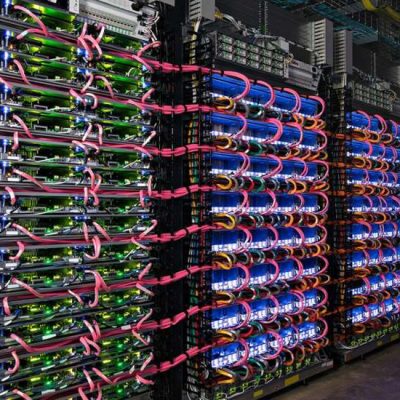
In the rapidly evolving technology landscape, the emergence of an AI chip startup is making headlines for all the right reasons. Groq, a Silicon Valley-based startup, has successfully raised $750 million in funding, effectively doubling its valuation to an impressive $6.9 billion. This remarkable achievement is not just a testament to Groq’s innovative vision; it highlights the fierce competition in the AI chip sector as investors are eager to support fresh challengers to the dominance of Nvidia. According to recent reports, the investment frenzy surrounding AI infrastructure is only set to grow.
Breaking Through the Noise: The Groq Approach
Groq was founded by Jonathan Ross, a former engineer at Alphabet, who is keen on redefining the inference chip landscape. Unlike others in the field, Groq is not fixated on eliminating Nvidia; rather, it aims to secure its position in the market by offering specialized processors designed to execute pre-trained AI models with both speed and cost-efficiency. Ross succinctly states, “Inference is defining this era of AI, and we’re building the American infrastructure that delivers it with high speed and low cost.”
To underline the urgency of the situation, consider this: the AI chip market is projected to swell to an astonishing $400 billion annually within the next five years, signaling significant opportunities for multiple winners. Groq’s recent funding round, led by Disruptive and supported by heavyweight investors like BlackRock and Cisco, is set to enhance its production capacity and expand its global footprint.
This funding round comes just a year after Groq’s $640 million Series D funding, which previously valued the company at $2.8 billion.
Enhancing Market Position: Strategic Deals on the Horizon
One of Groq’s significant strategic moves includes a $1.5 billion agreement with HUMAIN, a Saudi Arabian AI firm chaired by Crown Prince Mohammed bin Salman. This partnership is expected to yield substantial revenue, potentially exceeding $500 million this year alone. To meet the rising demands from international clients, Groq has begun building new data centers, including its first European hub in Helsinki—now operational.
As Ross notes, while Nvidia remains a formidable player in the training chip market, inference chips are quickly gaining traction. Despite Groq’s growing share, Ross predicts, “I don’t know if Nvidia will notice how much of the pie we eat, but we will feel quite full off of it.” This sentiment echoes the competitive landscape, where the importance of inference chips cannot be overstated.
Similar to strategies discussed in our analysis of AI chip stocks, Groq isn’t alone in this pursuit. Competing companies like Cerebras and AMD are also engaging in this lucrative market, proving there’s ample space for innovation and success.
Leveraging The Future: A Broader Horizon
As Groq continues to scale its operations, the momentum it has built cannot be overlooked. A recent viral chip demonstration further increased Groq’s visibility within the tech community. Additionally, the playful, semi-serious branding feud with Elon Musk’s xAI over the name of its chatbot “Grok” captures Groq’s agility in maintaining relevance in the ever-competitive chip sphere.
By asserting that “inference is worth billions,” Groq aims to demonstrate its value proposition. The company believes in capturing a significant portion of the market, confident that it can coexist alongside or even thrive in competition with Nvidia. If Groq delivers on contracts and maintains its strategic focus, the current $6.9 billion valuation may indeed be just the beginning.
A Future Formed by AI Chip Startups
The success story of Groq exemplifies the rising potential of AI chip startups. Investors are now more convinced than ever that this sector is critical for the future of technology and artificial intelligence. With major investments pouring in and innovative strategies being implemented, companies like Groq are paving the way for sustainable growth in AI infrastructure.
Groq’s achievements highlight a broader trend in the tech landscape: the growing demand for intelligent computing solutions. With mounting pressure on traditional chip manufacturers to deliver advanced capabilities, the spotlight is firmly on startups, which are redefining the playing field through their agility and novel approaches.
For those interested in understanding more about the evolution of the AI chip market, check out our detailed post about CrateDB’s revolutionary approach to AI data infrastructure. This is just one of many examples highlighting the dynamic and rapidly evolving nature of this industry.
Conclusion: Setting the Stage for Tomorrow’s Innovations
The rise of Groq and its impressive funding success serve as a powerful reminder of the burgeoning potential within the AI chip startup ecosystem. As the need for efficient AI solutions continues to escalate, the entry of these startups indicates a shift towards diversification in chip technology. With giants like Nvidia setting high benchmarks, Groq’s trajectory highlights not only its ambition but also the overall appetite for innovative technologies.
For more insights about the AI professional network landscape, refer to our exploration of the evolution and challenges faced by AI startups today.
To deepen this topic, check our detailed analyses on Tech Startups section