In the ever-evolving landscape of cybersecurity, one of the most alarming threats gaining traction is the RomCom malware. Surprisingly, recent statistics highlight that the use of social engineering tactics, like fake update alerts, significantly increases the risk of malware infections. One instance of this is the RomCom malware, which has been linked to sophisticated cyber-espionage campaigns. Understanding the tactics and techniques employed—like the SocGholish fake update attacks—can empower individuals and organizations to bolster their defenses against these malicious incursions.
Understanding the Mechanisms Behind RomCom Malware
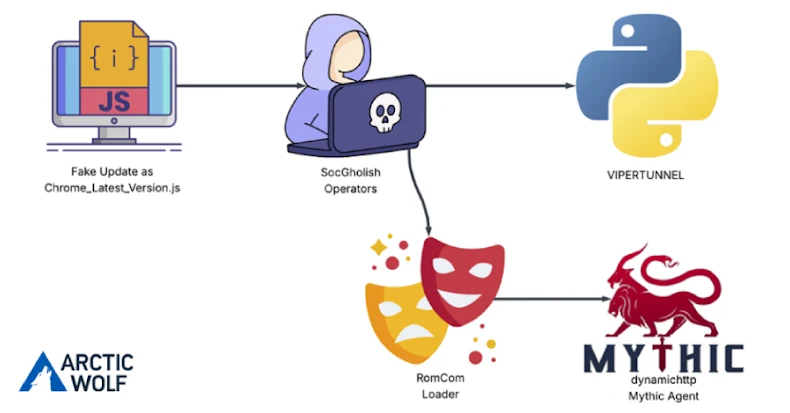
The RomCom malware, specifically associated with a group of threat actors known for both cybercrime and espionage since 2022, has evolved to exploit certain vulnerabilities effectively. One prominent method is the use of a JavaScript loader called SocGholish, which creates a dangerous chain of infection. This loader serves as an entry point for delivering other malware, including the notorious Mythic Agent.
According to research by Arctic Wolf Labs, the recent targeting of a U.S.-based civil engineering firm exemplifies this malicious activity. Here, cybercriminals leveraged SocGholish to execute fake updates, taking advantage of compromised legitimate websites. Such tactics are particularly effective because they prey on the unsuspecting nature of users, tricking them into downloading malware disguised as software updates.
The Threat Landscape: Identifying Risks and Vulnerabilities
Organizations must recognize the risks associated with RomCom malware, especially as attack methods continuously evolve. As discussed in our analysis of ChaosBot malware, attackers are becoming increasingly ingenious in their tactics. For instance, SocGholish typically serves fake browser update alerts for popular browsers like Google Chrome and Mozilla Firefox, luring users into a false sense of security.
Equipped with this knowledge, companies should:
- Conduct regular training sessions to educate employees about recognizing phishing attempts.
- Implement robust web security measures to ensure that their sites are not easily compromised.
- Utilize security plugins that can help detect and mitigate JavaScript vulnerabilities.
Research shows that malware attacks, like those executed by the RomCom malware group, can escalate rapidly. As noted by Arctic Wolf’s Jacob Faires, the timeline from infection to payload delivery can be alarmingly brief. Understanding how to mitigate these risks is crucial to maintaining operational integrity.
Strategic Response: Preventing RomCom Malware Infiltration
To fortify against RomCom malware, businesses can adopt several strategies:
- Implement strong firewall protections and intrusion detection systems to identify unusual activity.
- Regularly update software and systems to patch vulnerabilities.
- Conduct routine security audits to ensure compliance with best practices.
Moreover, adopting a multi-layered approach can provide an effective barrier against potential breaches. The integration of threat intelligence solutions can facilitate early detection of vulnerabilities, which is essential for the proactive defense of networks.
Case Study: Recent RomCom Malware Incidents
The targeting of a civil engineering company—known for its ties to Ukrainian projects—illustrates the geopolitical dimensions often tied to RomCom malware attacks. The attack mechanism generally involves using reconnaissance techniques and executing remote access tactics once the malware is successfully deployed. For instance, the delivery of a custom Python backdoor, codenamed VIPERTUNNEL, is particularly concerning as it enables the attacker to maintain a foothold in the victim’s network.
As noted by cybersecurity professionals, the speed and stealth of such operations make them potent threats, especially for organizations operating in sensitive sectors like defense. For further context, similar to strategies discussed in our overview of Soopsocks malware, understanding the attack vector is crucial for enhancing your organization’s security posture.
Conclusion: Staying Informed and Prepared
In conclusion, as threats like RomCom malware continue to emerge, organizations must remain vigilant and proactive. Access to the latest intelligence on malware trends helps in shaping comprehensive defense strategies. Staying informed not only prepares companies for potential incidents but also strengthens their overall security posture.
To deepen this topic, check our detailed analyses on Cybersecurity section.
To deepen this topic, check our detailed analyses on Cybersecurity section.